


Drinking water hygiene of 44% of the dairy farms in the Netherlands is subpar, according to Royal GD. That is a concerning finding, as water is the most important nutrient for dairy cattle. A high-producing dairy cow can drink more than 100 litres of water per day, making clean drinking water a key factor in animal health, rumen function and milk production. When drinking water systems become contaminated with biofilm and bacteria, cows may ingest unwanted microorganisms with every sip. Fighting this microbial pressure costs energy. Energy that should be used for milk production, growth or reproduction.
To investigate the impact of cleaner drinking water systems, Kanters carried out a field trial with Aqua-clean on four dairy farms and a veal calf farm.
Testing Aqua-clean
Unlike poultry and pig barns, cattle barns are continuously occupied, limiting intensive cleaning options. As a result, contamination such as biofilm, bacteria, iron deposits and other organic matter can gradually build up inside the system and water hygiene products must be applied safely at low doses via the drinking water system, raising the question whether this approach is sufficient to control biofilm and other contaminants.
The aim of this research was to assess the effectiveness and applicability of Aqua-clean in the dairy sector when used in different types of drinking water systems.
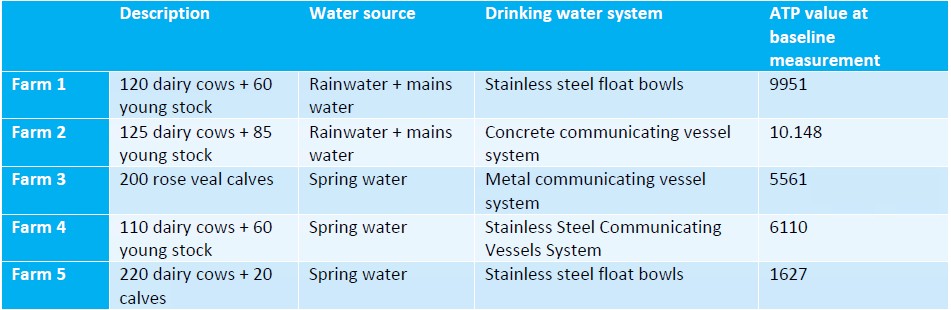
Before the start of the trial, baseline measurements were taken on each farm. Water quality was assessed using ATP measurements, an indicator of microbial contamination, alongside pH, temperature and additional parameters such as iron and manganese levels. Farms with elevated ATP values were subsequently treated with Aqua-clean for approximately 6 weeks.
During the trial, water quality was monitored twice weekly. In addition, milk production and water intake were evaluated wherever possible. The dosage of Aqua-clean was gradually adjusted based on ATP measurements and residual peroxide levels to ensure both effectiveness and animal safety.
Finally, the practical and economic value of Aqua-clean was assessed by calculating the potential return on investment (ROI) based on the observed production improvements.
Rapid upgrade in water hygiene
The most striking result was the significant reduction in ATP values on all participating farms.
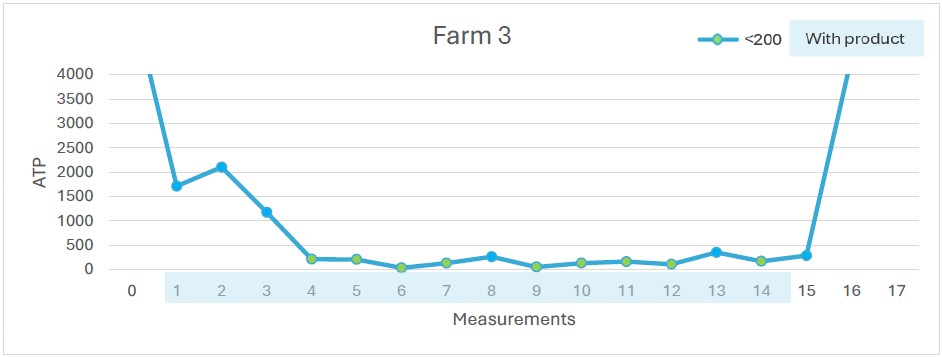
Initial ATP values ranged from 1,627 to over 10,000. After only two weeks of Aqua-clean use, ATP values had dropped substantially on every farm. One farm reduced its ATP value from 5,561 to just 33, while another dropped from over 10,000 to 815.
The largest improvements occurring during the first two weeks of application, demonstrates Aqua-clean’s effectiveness in improving water hygiene under practical conditions.
The most striking result was the significant reduction in ATP values on all participating farms.
Initial ATP values ranged from 1,627 to over 10,000. After only two weeks of Aqua-clean use, ATP values had dropped substantially on every farm. One farm reduced its ATP value from 5,561 to just 33, while another dropped from over 10,000 to 815.
The largest improvements in ATP values occurring during the first two weeks of application, demonstrates Aqua-clean’s effectiveness in improving water hygiene under practical conditions.
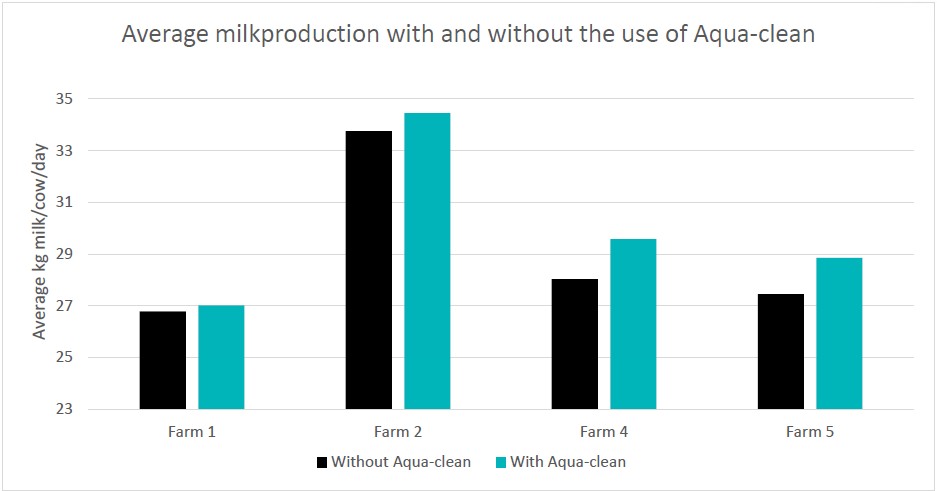
On one farm, a significant increase in water intake and rumination activity among dry cows were observed. More importantly, multiple farms recorded higher average milk production during the Aqua-clean period compared to the reference period. While longer-term research is required to confirm these effects, the first indications are encouraging.
Cleaner water, higher returns
Improving water hygiene is not only a technical issue. It can also have a direct economic impact.
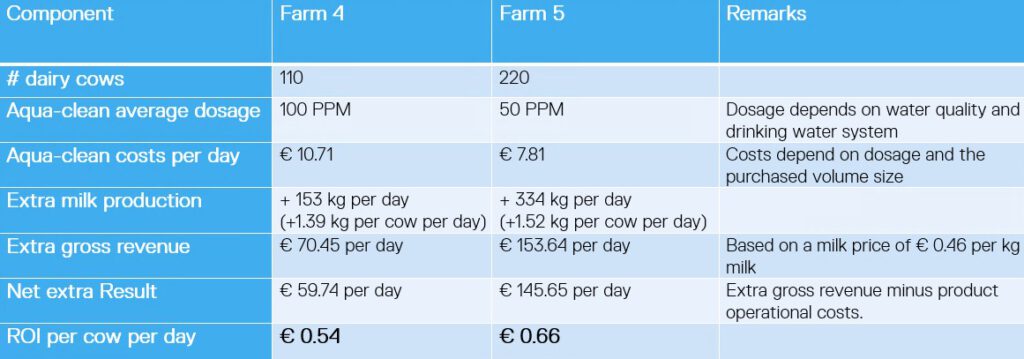
For two participating farms, the return on investment (ROI) was calculated. Depending on the farm, Aqua-clean generated an ROI between €0.54 and €0.66 per cow per day. Extrapolated to a herd of 100 cows, this represents a potential annual return of nearly €20,000 to €24,000.
Even investments in dosing equipment showed short payback periods, ranging from approximately 10 to 25 days.
Water hygiene, the hidden performance driver
This field trial highlights an often-overlooked reality: clean drinking water starts inside the drinking water system.
Across five cattle farms, Aqua-clean consistently reduced microbial contamination and biofilm, resulting in significantly improved water hygiene. At the same time, the trial revealed promising indications for increased milk production, improved animal performance, and attractive economic returns.
The research is now being extended into a long-term study to further investigate the impact on animal health and production results. For dairy farmers looking to improve drinking water quality, control biofilm, and optimise herd performance, the message is clear:
Clean water is not a cost. It’s an investment.
Do you also want to invest in better farm results? Contact us.