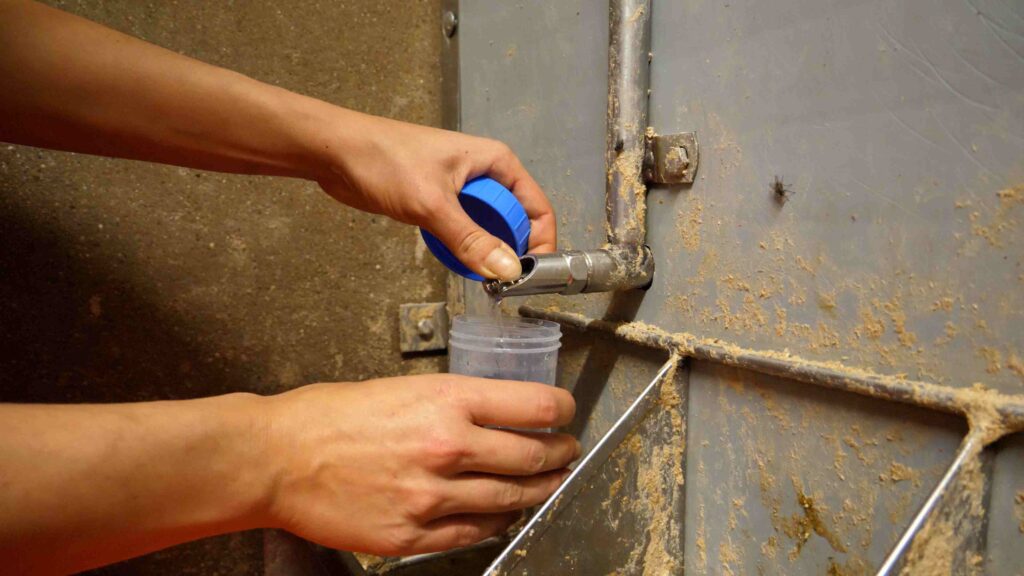





Did you know that heating and microbial growth in mixed rations cause significant and above all unnecessary losses on dairy farms every year? Heating not only affects the palatability of the feed but also leads to a loss of valuable nutrients. Naturally, you want to prevent feed heating on your farm. With the right tools and solutions, you can easily keep your feed fresh and palatable.
What is heating?
When the ambient temperature rises above 20 °C, the ration warms up within 6 to 12 hours. At high ambient temperatures, bacteria, yeasts, and molds in the feed get the opportunity to multiply exponentially. This makes the feed less palatable, causing cows to eat less and leading to the loss of important nutrients. This results in reduced growth and lower production.
Detect heating early!
To make detecting heating easy, we are introducing our new thermal imaging camera and probe thermometer.
Thermal imaging camera
The thermal imaging camera is an ideal tool for our advisors to detect overheating in cattle rations and silage directly at your location. By easily connecting the camera to a smartphone, we obtain direct insight into temperature differences, hidden heat sources, and areas of active fermentation. This enables us to scan the entire silage face in a single glance.

Probe thermometer
Next, the probe thermometer can be used to measure the exact temperature of the heat sources. Available directly from us, this device makes it easy to monitor temperatures yourself. By simply inserting the probe into the silage or ration, the sensor in the tip precisely measures the temperature and displays it instantly on the screen.
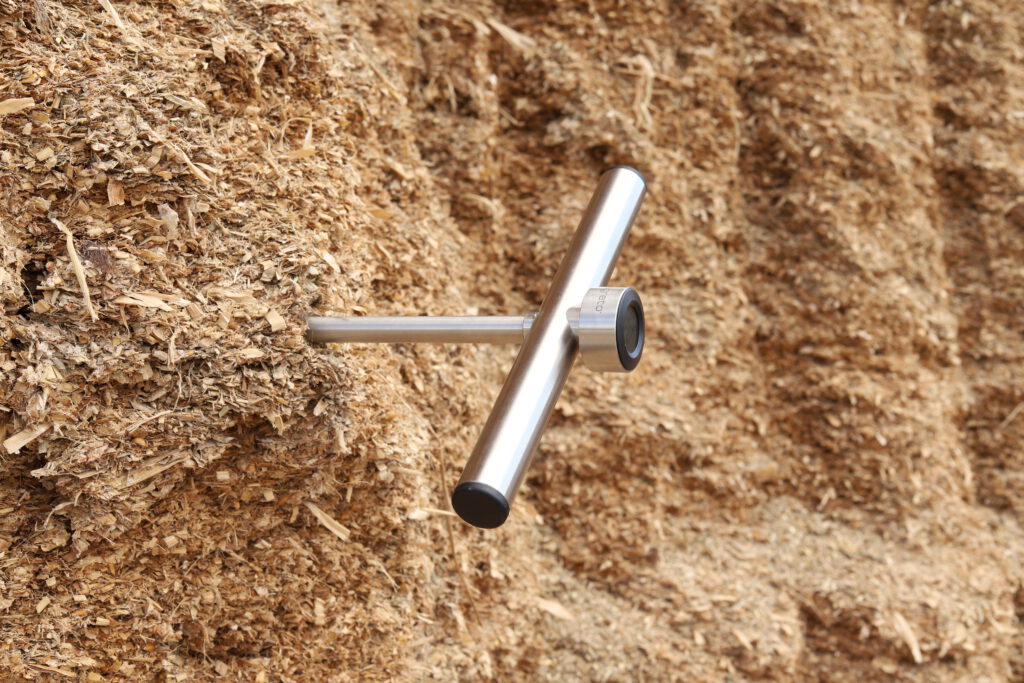
The probe thermometer quickly and clearly maps out the situation in your silage, allowing you to take immediate, targeted steps to prevent further losses.
By acidifying the ration, you inhibit bacteria, yeasts, and molds, ensuring the feed retains its nutritional value.
Nutripreserve
The Nutripreserve line has been specially developed to inhibit heating, keeping the feed cool and fresh, even with once-a-day feeding. Field trials with Nutripreserve Basic have shown that at temperatures of 20 degrees or higher, the feed mixture not only remains an average of 6 degrees cooler, but its use also results in a 10% higher feed intake.
Feed can also heat up during the winter period, making the administration of Nutripreserve Basic highly advantageous. For instance, research conducted during the winter period has shown that structurally adding this product results in a production increase of up to 1 kg of extra milk per cow per day.
Would you like to learn more about preventing heating and increasing feed intake for your cattle? Contact us.